
Disclosure first: we run Base Note, a luxury fragrance subscription that ships a 5 ml atomizer of a designer or niche fragrance every month for a flat $20. We sell the real thing — Creed, Tom Ford, Parfums de Marly, Xerjoff, Bond No. 9 — so we have an obvious commercial interest in you not buying a clone. Which is exactly why we are being careful. Most “clones are bad” content is written by people selling the original, and most “clones are just as good” content is written by affiliates earning on the clone. What follows names what you gain and what you give up, including where the clone wins.
If you only read one thing: A clone and a counterfeit are not the same thing, and conflating them is the single biggest mistake in this conversation. A clone is a legal, openly branded fragrance built to smell like a famous one. A counterfeit is a fake bottle pretending to be the original, and that is where the real risk lives. What you lose with a good clone is usually narrower than the internet claims: mostly raw-material grade in the dry-down, some quality control, and the ability to know what you actually like. With a counterfeit you lose everything, including any idea what you just sprayed on your skin. And the option most people skip: smell the original for a month before you spend anything on either.
First, the vocabulary. These four words are not synonyms
The fragrance internet uses clone, dupe, inspired-by and fake interchangeably. They are four products with four different risk profiles.
| Term | What it actually is | Legal? | Does it claim to be the original? | Main risk to you |
|---|---|---|---|---|
| Clone | Built deliberately to smell as close as possible to one specific famous fragrance, sold under its own brand name | Yes | No | Dry-down diverges from what you smelled in the first ten minutes |
| Dupe | Shopper slang. Usually means clone, sometimes just “cheaper thing in the same genre” | Yes | No | The word promises more accuracy than the product owes you |
| Inspired-by | A house citing a reference scent as a starting point, without matching it note for note | Yes | No | Expectation mismatch. You bought a cousin, not a twin |
| Counterfeit / fake | Packaged and labelled as the original brand, but not made by it | No | Yes | Unknown contents on your skin, no recourse |
Only the last row is illegal. The first three are a legitimate, decades-old segment of the industry, and the reason is structural: a finished formula is kept as a trade secret rather than protected as published intellectual property. As Wikipedia’s perfume entry puts it, “The precise formulae of commercial perfumes are kept secret” (Source: Wikipedia, “Perfume”). A secret can be analysed and approximated by anyone with a lab, and no law is broken doing it. Houses like Armaf and Al Haramain sell openly under their own names rather than pretending to be anyone else.
For the deep version applied to the most cloned fragrance in the world, see Creed Aventus Dupes and Clones: An Honest Guide. This post is the category-level version.
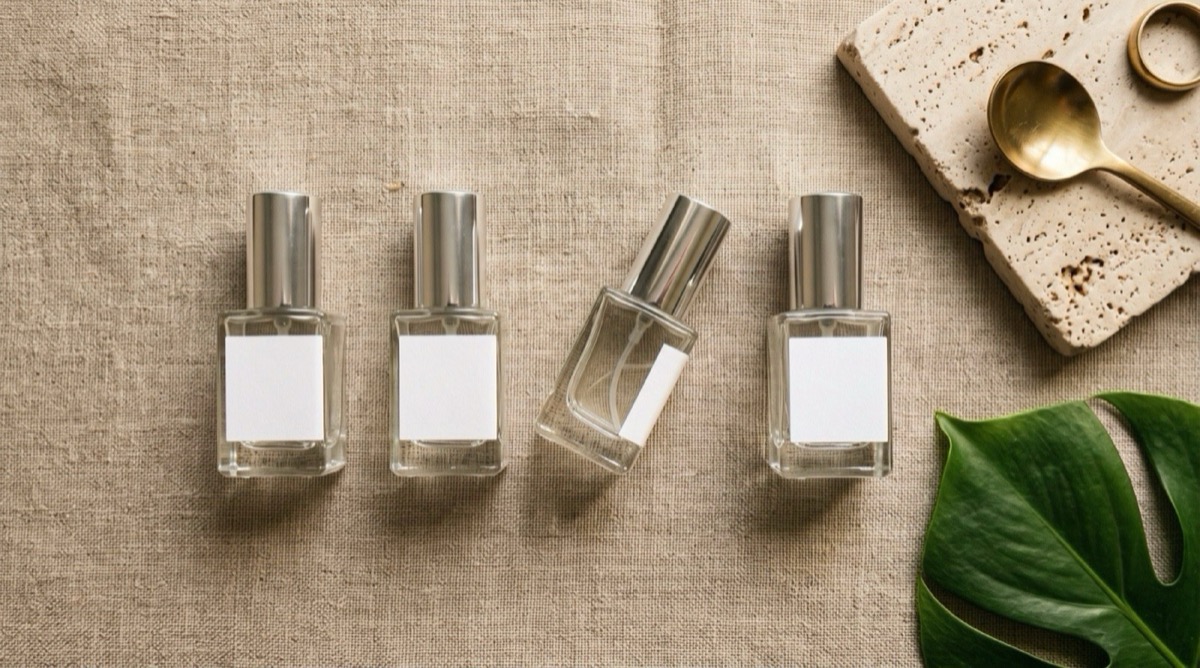
The honest case for clones
1. The price gap is enormous and it is real
Creed’s own boutique lists Aventus Eau de Parfum between $270 and $510 depending on size (Source: Creed Boutique, prices fetched 18 August 2026). Well-regarded clones sell for a small fraction of that. If your realistic alternative to a clone is owning nothing, the clone is not a compromise. It is access.
2. Some clones genuinely outperform on projection
Clone houses know what they are judged on, and it is not subtlety. Loading a formula with high-impact synthetics that push hard off the skin is a deliberate, competent choice, and a clone can smell stronger than the original for the first few hours. If your complaint about expensive fragrance is that nobody notices it, a clone may solve your problem better than the original does. (See Projection vs Sillage vs Longevity.)
3. The originals are not immune to the criticisms aimed at clones
The most common charge against clones is batch inconsistency. It is also true of luxury originals, for an unavoidable reason: naturals are agricultural. “Natural scents will vary from each supplier based on when and where they are harvested, how they are processed, and the extraction method itself” (Source: Wikipedia, “Perfume”). Any house leaning on naturals inherits that variance. Anyone promising a $500 bottle is identical year to year is selling you something.
So what are you actually losing?
The dry-down, not the opening
This is the single most useful thing to understand about clones. Copying the first ten minutes is easy: top notes are loud, cheap, well-understood citrus and fruit materials. Copying hour six is hard, because the base is where expensive naturals and slow-evaporating fixatives live. So the typical clone is uncanny for fifteen minutes, close for an hour, recognisably different by the afternoon, and a different fragrance by evening. Take Creed Aventus, whose pyramid runs blackcurrant, bergamot and lemon over pineapple, pink pepper and jasmine, landing on birch, patchouli and musk. The blackcurrant-and-bergamot opening is the famous part and the clonable part. The birch-and-patchouli floor is the part that costs money. Smell only a clone and you have mostly smelled the top of the pyramid. Our guide to top, heart and base notes explains why that structure matters.
Quality control, and who answers when it goes wrong
Established houses run a documented supply chain and a returns process. Smaller clone operations vary enormously — some are excellent, some ship two bottles of the same SKU that smell meaningfully different, and you are usually buying without recourse. A real cost even when the juice is good.
Knowing what you actually like
Build a wardrobe out of clones of five famous fragrances and you have not developed taste — you have collected other people’s greatest hits, filtered through a second perfumer’s approximation. The people happiest with what they wear are the ones who smelled a lot of real things on their own skin and noticed which they reached for. See How to Find Your Signature Scent.
What you are not losing
You are not losing legality, and with a reputable clone house you are not automatically losing safety either. Legitimate clone brands sell into the same regulated retail channels as everyone else. The safety argument belongs to the counterfeit conversation; blurring the two is a marketing tactic, not a fact.
The line that actually matters: counterfeits
Counterfeiting is not a niche problem. Counterfeit goods made up approximately 2.5% of global trade in 2019, with an estimated value of $464 billion, and up to 5.8% of goods imported into the European Union in 2019 were counterfeit (Source: Wikipedia, “Counterfeit consumer goods”, citing OECD/EUIPO figures for 2019). Beauty sits inside it: the same source reports U.S. Customs estimates the cosmetic industry loses approximately $75 million annually to counterfeits, and that agents seized more than 2,000 shipments of counterfeit beauty products in 2016.
The practical difference is simple. A clone tells you it is not the original. A counterfeit’s whole business model is that you cannot tell — so you cannot know what is in it, what concentration it is, or where it was made, and there is no brand to complain to, because the brand on the box never made it. If a fragrance causes a skin reaction, stop using it and talk to a doctor.
The tell is the branding. A product proudly wearing its own name is playing a legal game. A product wearing someone else’s name at a steep discount is not.
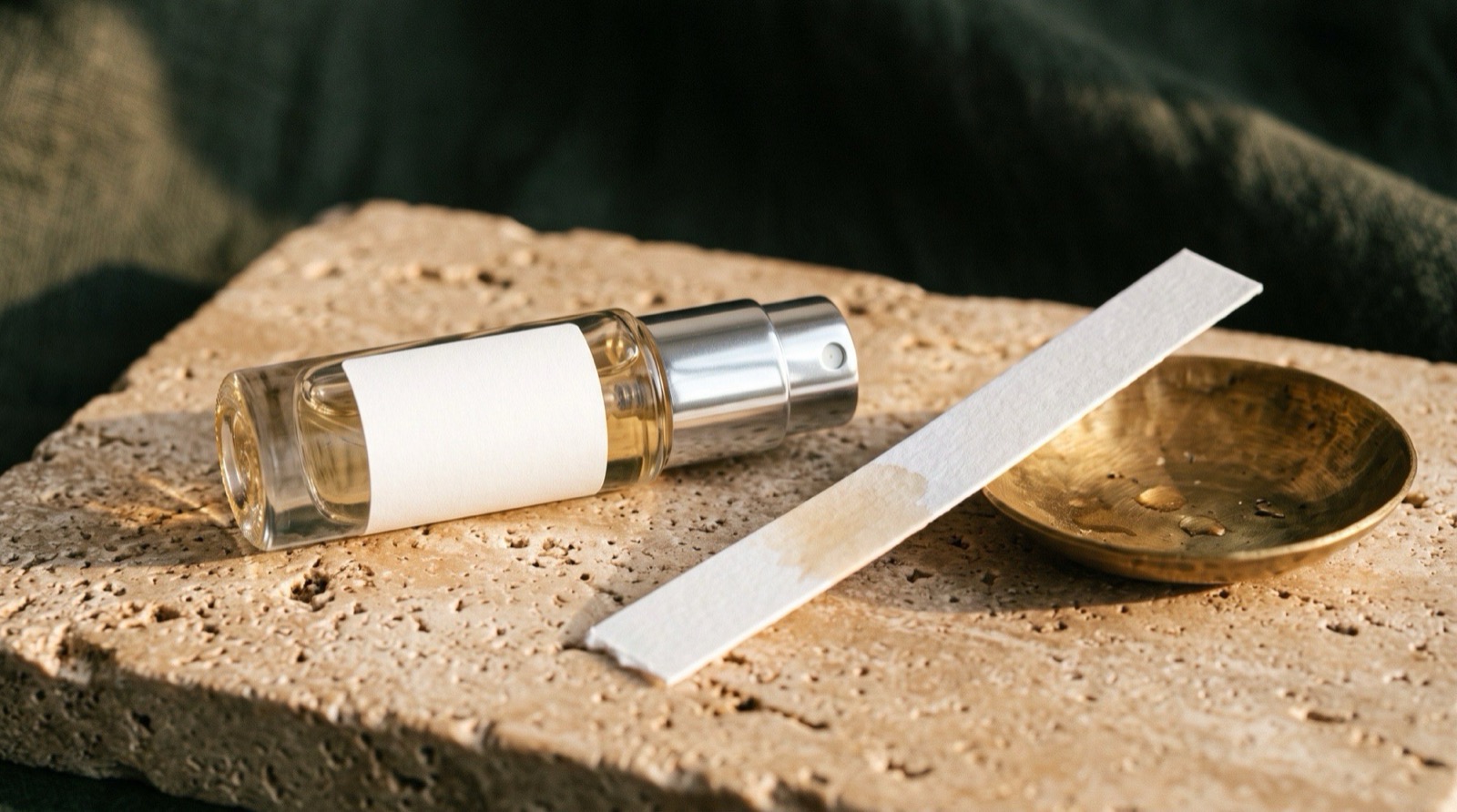
Why the original you buy today is not the original from 2013 either
Here is the part clone-sceptics leave out: authentic fragrances get reformulated too, for reasons nobody at the house controls. The International Fragrance Association is “the global representative body of the fragrance industry” and its Standards designate materials as prohibited, restricted to prescribed quantities, or subject to specific compliance criteria (Source: Wikipedia, “International Fragrance Association”). When a Standard tightens, formulas change. Oakmoss is the textbook case: “Its use in perfumes is now highly restricted by International Fragrance Association regulations, and many scents have been reformulated in recent years with other chemicals substituted for oakmoss” (Source: Wikipedia, “Oakmoss”). This kind of reformulation runs across the whole category, not just clones trying to catch up.
So “buy the authentic one” is not a promise of a fixed, eternal scent. It is a promise of a known supply chain and a house that owns the result. Perfect immutability is not on the table for anyone.
One more caveat: concentration labels are looser than they sound. “The terminology of extrait, EdP, EdT, and EdC is quite imprecise about oil concentration” because different companies assign varying amounts to each category (Source: Wikipedia, “Perfume”). A clone labelled EDP is not automatically stronger than an original labelled EDT.
Four routes to the same smell, priced honestly
| Route | What you get | What you give up | Best when |
|---|---|---|---|
| Buy a reputable clone | The recognisable opening, often strong projection, a fraction of the price | Base-note fidelity, consistency, recourse | You know you love the profile and want volume for daily wear |
| Buy a counterfeit | Nothing you can verify | Everything, including knowing what is on your skin | Never |
| Buy the full authentic bottle | The real composition, the house’s supply chain, best cost per ml | Up to $510 up front on a scent you may not love | You have worn it for weeks and you are sure |
| Wear the authentic one in small size first | A month of real dry-downs on your own skin | Higher cost per ml than a full bottle | You are still deciding, which is most people |
The sample-first alternative, with the math shown
Here is our own option, including the number that does not flatter us. Base Note is $20 a month, flat, for a 5 ml atomizer of a genuine luxury fragrance — roughly 60 sprays, enough to live with a scent through a workweek, a rainstorm and a dinner. That is $4.00 per ml. First month is 25% off at $15, or $3.00 per ml. Swap monthly, cancel anytime. Every product page shows the concentration (Eau de Parfum unless marked otherwise) and the country of origin.
Compare on the same basis. Creed’s Aventus Discovery Set is three 10 ml vials — Aventus, Aventus Cologne and Absolu Aventus — for $300 (Source: Creed Boutique, fetched 18 August 2026). That is $10.00 per ml. The 100 ml bottle at $510 works out to $5.10 per ml, which is less per ml than our subscription. We are not hiding that. If you already know Aventus is your fragrance, buy the bottle.
The subscription wins on a different axis: the cost of being wrong. $20 to find out Aventus is not for you, versus $510. And on breadth — a month with Parfums de Marly Layton (apple and lavender into vanilla, guaiacwood and praline), then Xerjoff Erba Pura (Sicilian orange into white musk, Madagascar vanilla and amber), then Creed Green Irish Tweed. Thirty-two fragrances, one flat price. Browse the whole rotation or take the scent quiz.
We made the general case in Should You Sample Before You Buy? and priced the category in our cost-per-ml comparison.
When a clone is the right answer
- You wear it to the gym, or anywhere it is sweated off by noon. Burning through expensive juice is a bad trade regardless of quality.
- You have lived with the original and love the opening specifically. If the first two hours is what you want, that is the part clones reproduce best.
- The original is discontinued or absurd on the secondary market. Sometimes the clone is the only remaining access to it.
The wrong case is the common one: buying a clone of a fragrance you have never smelled, then concluding you know whether you like the original. You do not. You know whether you liked one perfumer’s reading of its first ten minutes.
FAQ
Are fragrance clones legal?
Yes. Finished formulas are held as trade secrets rather than publicly protected inventions — “The precise formulae of commercial perfumes are kept secret” (Source: Wikipedia, “Perfume”) — and approximating a scent under your own brand name is lawful. Counterfeiting, selling a product falsely branded as the original, is not.
Do clones smell exactly like the original?
For the opening, often very close. For the dry-down, usually not, because the base is where expensive naturals and fixatives do the work. Judge a clone at hour four, not minute four.
Is a clone safe to wear?
A clone from a reputable house sold through normal retail is a regulated cosmetic like any other. A counterfeit is not, because you cannot verify what is in it or who made it. If any fragrance causes irritation, stop and talk to a doctor.
Why do luxury fragrances change over time if they are the “real” ones?
Agricultural variance in naturals, plus regulatory change — IFRA Standards designate materials as prohibited or restricted to prescribed quantities, and when they tighten, formulas are reworked (Source: Wikipedia, “International Fragrance Association”). Oakmoss is the best-known example.
What’s the low-cost honest way to find out if I like Aventus?
Wear the real one for a month at $20, or $15 for a first month, and decide with your own nose. Then buy the full bottle, buy the clone, or buy nothing — all three are respectable outcomes, and only one is available to someone who has never smelled the original.
Related: Why You Smell the Way You Do, Designer vs Niche, Best Fragrance Subscriptions of 2026.
— Jeff Theefs & Alex Cherne, Founder & Cofounder, Base Note
```