
Disclosure first: we run Base Note, a luxury fragrance subscription that ships a 5 ml atomizer of designer and niche scents every month for a flat $20. Longevity complaints are the single most common thing subscribers write to us about, and we have a commercial interest in you believing the fix is a better fragrance rather than a better technique. So we went and read the actual research before writing this — including a 2025 peer-reviewed study that measured fragrance evaporating off real people’s skin. Some of the popular advice holds up. Some of it is backwards. One of the most repeated tips on the internet is, as far as we can tell, doing the opposite of what people think it does.
If you only read one thing: Most of how long a fragrance lasts is decided before you ever touch the atomizer — by its concentration and the weight of its base notes. Technique is the remaining slice, and within that slice, the highest-leverage move is applying to skin that has already been moisturised. Pulse points are real, but they are a projection tool, not a longevity tool: warming a fragrance makes it evaporate faster, which means more people smell it and it is gone sooner. And a large share of “it disappeared after an hour” is not disappearance at all. It is your own nose switching off.
The ranked list, at a glance
| # | What to do | How much it moves the needle | How solid is the evidence? |
|---|---|---|---|
| 1 | Choose a higher concentration (EDP or parfum over EDT) | Largest single factor. Hours, not minutes | Strong. Industry-standard oil percentages |
| 2 | Choose a composition with heavy base notes (vanilla, oud, sandalwood, amber, tonka, labdanum) | Very large. Two fragrances at identical concentration can differ by half a day | Strong. Base notes are defined by slow evaporation |
| 3 | Moisturise first with an unscented lotion or balm | Moderate, and it matters most for the heavy notes you actually want to keep | Mixed but improving. One 2025 in-vivo study supports it; two earlier ones did not |
| 4 | Spray onto clothing as well as skin (fabric-safe garments only) | Moderate. Fabric has no body heat and no skin chemistry | Weak formally, but mechanically obvious. Stain risk is real |
| 5 | Use pulse points | Small for longevity. Meaningful for projection | The physics is solid; the popular interpretation of it is not |
| 6 | Do not rub your wrists together | Small | Convention, not literature. Low cost to follow |
| 7 | Stop trusting your own nose after 30 minutes | Fixes the diagnosis, not the fragrance | Strong. Lab-measured |
Start here: most of the answer is bought, not applied
Before technique, arithmetic. A fragrance is aroma compounds dissolved in alcohol, and the ratio of one to the other is printed on the box. Ulta’s fragrance education page gives the standard industry bands: eau de cologne at “only 2-5% fragrance oil”, eau de toilette “ranging between 5-15%”, eau de parfum “around 15-20%” and “typically lasting 6-8 hours on the skin”, and parfum or extrait at “usually 20-30%”, which “lingers for 8-12 hours or more” (Source: Ulta Beauty, fetched 18 August 2026).
Treat those hour figures as a retailer’s rule of thumb rather than a measurement — they will not survive contact with a hot afternoon or a particular person’s skin. The percentages are the reliable part, and they are why the same scent name in two different bottles can behave like two different products. If you bought the EDT and are frustrated, you did not make a technique error. You bought a shorter fragrance. We wrote a full breakdown of what concentration does and does not change in EDT vs EDP vs Parfum.
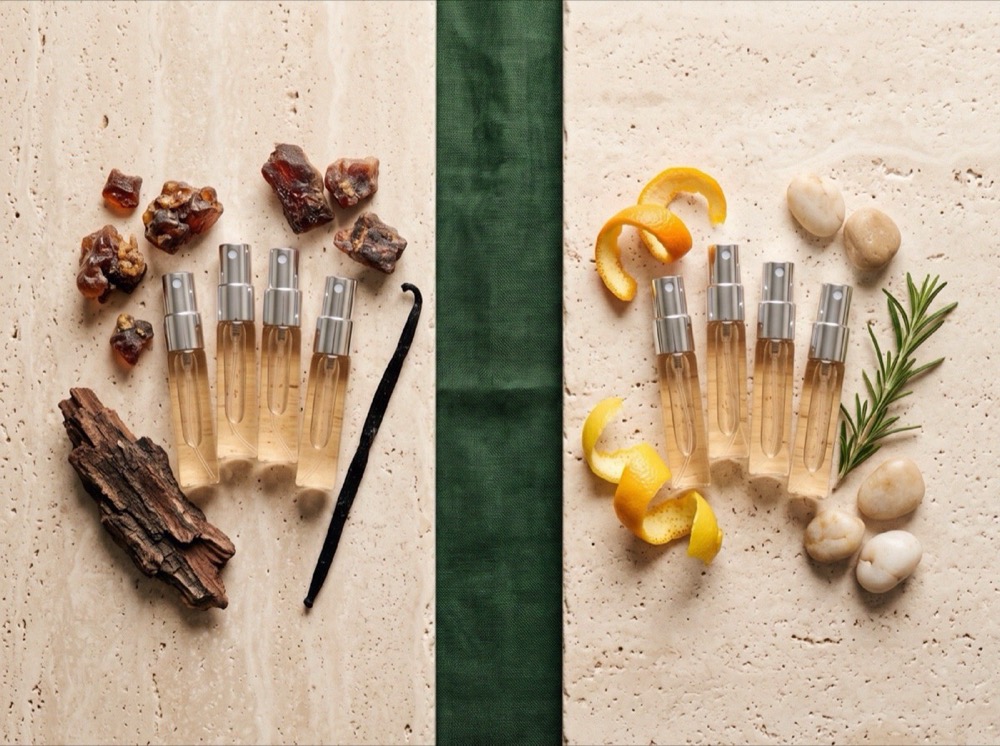
The second lever is composition. Perfumers build in tiers by evaporation speed: citrus and light herbs flash off in the first half hour, florals and spices hold the middle, and heavy resinous materials do the long shift. That is the whole mechanism — there is nothing else going on. If a fragrance is built on bergamot, sea notes and green mandarin, no amount of moisturiser is going to make it an eight-hour scent, because the molecules themselves are volatile by design. Our guide to top, heart and base notes walks through how to read a pyramid for exactly this.
What this looks like in a real catalogue
Here is the same principle applied to fragrances we actually carry, using the note pyramids from our own product pages. Every Base Note product page lists the concentration and country of origin, so you can check before you swap rather than after.
| If you want it to last | Base notes doing the work | If you want it bright, accept it is shorter | Base notes doing the work |
|---|---|---|---|
| Xerjoff Alexandria II | Vanilla, sandalwood, musk | Xerjoff Torino 21 | Lemon verbena, musk |
| Viktor & Rolf Spicebomb Extreme | Vanilla, amber, pipe tobacco | Creed Silver Mountain Water | Musk, petitgrain, sandalwood, galbanum |
| Parfums de Marly Haltane | Oud, patchouli, vetiver, leather | Bond No. 9 The Scent of Peace for Him | Cedar, vetiver |
| Bvlgari Le Gemme Orom | Agarwood (oud) | Dolce & Gabbana Light Blue | Musk, incense, oakmoss |
The left column is not better. It is longer. A vetiver-and-cedar scent that fades by lunch may be exactly right for a warm office, and a tobacco-vanilla that will not leave is a liability in the same room. Longevity is a spec, not a grade.
Tip 3: moisturise first — and the honest state of the evidence
“Hydrated skin holds scent better” is the single most repeated tip in this category, and until recently the research behind it was thin enough that we would not have printed it.
That changed in 2025. A study published in the International Journal of Cosmetic Science applied a fragrance mixture directly to the skin of 10 volunteers, semi-quantified the evaporation off each person, and measured their skin properties to explain the differences. The finding: “Two patterns of behaviour have been observed among fragrance molecules: the more volatile compounds whose evaporation increases with surface skin roughness and the less volatile and more lipophilic compounds influenced by skin hydration and transepidermal water loss.” (Source: International Journal of Cosmetic Science, 2025.)
Read that carefully, because it is more specific than the folk version. Skin moisture is linked to the behaviour of the heavy, oil-loving molecules — the base notes, the part of the fragrance you were hoping to keep. Skin texture is linked to the light ones you were going to lose anyway. Hydration is aimed at the right end of the pyramid.
Now the part most articles leave out. The same paper is candid that earlier work disagreed with it. It notes that a previous study found “No significant influence was observed from transepidermal water loss (TEWL), sebum concentration, or surface topography”, and dismisses it on grounds of scale — that study “is based on a single volunteer and lacks sufficient measurements to draw general conclusions.” It also cites a nine-volunteer study that “concluded that no significant differences in evaporation rates were observed for any molecule based on skin differences, except for the higher boiling components” (Source: International Journal of Cosmetic Science, 2025).
Ten volunteers is better than one and marginally better than nine. It is not a settled question. The authors also note their own panel skewed dry, and that sebum measured on the forearm sits close to zero, which is not where anyone actually wears fragrance. So: moisturising first is a low-cost move with a plausible mechanism and one supportive in-vivo study behind it. It is not a proven multiplier, and anyone quoting you a percentage improvement is making it up.
The Vaseline trick, adjudicated
The viral version says to rub petroleum jelly on your pulse points before spraying. Nobody has tested that specific claim against fragrance longevity in a study we could find. What has been tested is what petrolatum does to skin. A 2025 within-person randomised trial in the Journal of Clinical Medicine with 54 participants compared petrolatum and extra virgin olive oil on the forearm and reported that “Both EVOO and petrolatum significantly improved the SBF [skin barrier function] by increasing SCH [stratum corneum hydration] and reducing erythema and skin temperature. Petrolatum additionally reduced TEWL” (Source: Journal of Clinical Medicine, 2025).
So petrolatum moves both dials the 2025 fragrance study flagged: it raises hydration and lowers transepidermal water loss. That makes the hack mechanistically reasonable rather than nonsense. It is still an inference stacked on top of a ten-person study, not a demonstrated result — and note that the same trial found petrolatum reduced skin temperature, which cuts against projection. If you have sensitive, acne-prone or broken skin, or you react to occlusives, this is a question for a doctor or dermatologist, not a blog post. An unscented lotion you already tolerate is the lower-risk version of the same idea.
Tip 5: pulse points are not doing what you think
Wrists, neck, inner elbows. The reasoning goes: blood vessels are close to the surface there, the skin runs warmer, warmth releases the scent. All of that is true. The conclusion people draw from it is not.
Vapour pressure rises with temperature, and not gently — as a standard physical chemistry reference puts it, “the vapor pressure steadily increasing as the temperature increases”, and “the increase in vapor pressure is not a linear process” (Source: Chemistry LibreTexts). Faster evaporation means more molecules reaching other people’s noses per minute. It also means the supply on your skin runs down sooner.
Pulse points buy projection and spend longevity. That is a trade, and it is often the right one — a fragrance nobody notices is not succeeding either. But if longevity is your actual complaint, the cooler, more sheltered spots do better: the chest under a shirt, the back of the neck under a collar, the inner forearm. If you want the difference between these three properties spelled out, we covered it in projection vs sillage vs longevity.
Tips 4 and 6: fabric, and the rubbing thing
Clothing has no body heat, no sebum and no bacteria doing chemistry to your fragrance, which is why a scarf can still smell of last Tuesday. Spraying a garment is a genuine longevity extender. The costs are real too: oils stain silk and pale fabrics, and fragrance sitting on wool can turn over days rather than hours. Test an inside seam, keep it to robust fabrics, and never spray leather or suede.
“Don’t rub your wrists together” is repeated everywhere and we could not find a controlled study behind it. The stated mechanism — friction and heat accelerating the fragile top notes — is consistent with the physics above, but consistency is not evidence. We follow the rule anyway, because the cost of following it is zero.
Tip 7: the fade you are describing may not be happening
This one reframes the whole complaint. Your nose adapts to a constant smell fast, and it has been measured. A 2022 study in Foods put 19 untrained participants through the Sniffin’ Sticks test under three conditions — no fragrance, a “just-about-right” level, and an excessive level. The result: “the odor discrimination, odor threshold, and combined TDI performances were significantly lowered in the two conditions with the perfume fragrance, while the odor identification performance exhibited no significant differences” (Source: Foods, 2022).
Wearing your own fragrance measurably degrades your ability to detect and discriminate odours. So the person least qualified to judge whether your scent is still there is you. Before you reach for a sixth spray, ask someone else. The overspray that follows a false fade is how people end up as the coworker everyone can locate from the lift.
Two related things are worth knowing here: a fragrance genuinely does smell different on you than on the person who recommended it, which we unpack in why perfume smells different on me, and the biology underneath all of this is in our pillar piece, why you smell the way you do.
The 60-second routine we would actually use
- Apply within a few minutes of a shower, while skin is warm and still holding water.
- Unscented lotion on the areas you are about to spray. Unscented matters — a scented moisturiser is a second fragrance you did not choose.
- Two to four sprays, held about 15 cm away, on chest, back of neck and inner forearm. A 5 ml atomizer gives you roughly 60 sprays, so that is about two to four weeks of daily wear from one vial — the maths is in how long a 5 ml atomizer lasts.
- One optional spray on a robust garment after a seam test.
- Do not re-evaluate for at least 30 minutes, and do not top up based on your own nose.
Where we fit, briefly
The uncomfortable implication of everything above is that the biggest fix is not a technique, it is a different bottle — and finding out which bottle usually costs $200 to $500 per experiment. That is the problem Base Note exists to solve. One flat price. Every luxury fragrance. Build your signature rotation. Every month you get a 5 ml atomizer, roughly 60 sprays, for a flat $20 with 25% off your first month at $15. Swap monthly, cancel anytime, and the concentration and country of origin are on every product page so you can select for longevity deliberately instead of hoping.
Two weeks of wearing a heavy-base scent on moisturised skin will teach you more about your own longevity than any article will, including this one. Start with the scent quiz, or browse the full rotation. If you are weighing us against the alternatives, we wrote an honest comparison of fragrance subscriptions and a piece on what Scentbird subscribers switch to.
— Jeff Theefs & Alex Cherne, Founder & Cofounder, Base Note
```